Why are flamingos pink?
Short answer: Flamingos are pink because of what they eat. Algae make pigments called carotenoids, and flamingos get them by eating the algae or the brine shrimp that feed on them. Liver enzymes turn the carotenoids into feather pigment. Chicks hatch white-gray and need about two years of this food to reach their adult color.
Born white and gray
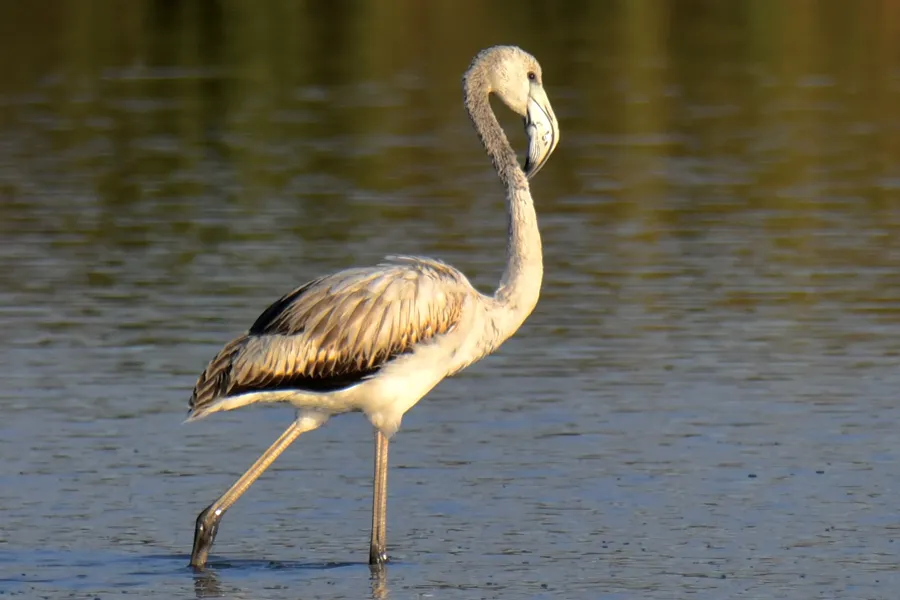
Baby flamingos are not born pink. According to the Smithsonian's National Zoo, chicks hatch with white-gray down and straight bills. The pink feathers and the hooked bill take several years to arrive.
Until a chick can eat on its own, both parents feed it crop milk, a fluid rich in proteins and fats. Tim Savage, who runs the bird section at Whipsnade Zoo in England, has noticed a side effect. Parents pass so much food to their chick that their own feathers wash out and turn lighter. The Los Angeles Zoo says chicks stay gray until they switch to solid food. Full adult color takes about two years.
Where the pink starts
The color comes from pigments called carotenoids. Many plants make them in red, yellow or orange shades, and so do the microscopic algae that brine shrimp eat. Beta-carotene, the pigment in carrots, belongs to the same family.
Brine shrimp take in the pigments with the algae. Flamingos eat the algae, the shrimp, or both. That is where the popular answer "they eat shrimp" comes from. The pigment starts in the algae, and shrimp only pass it along.
Eating upside down
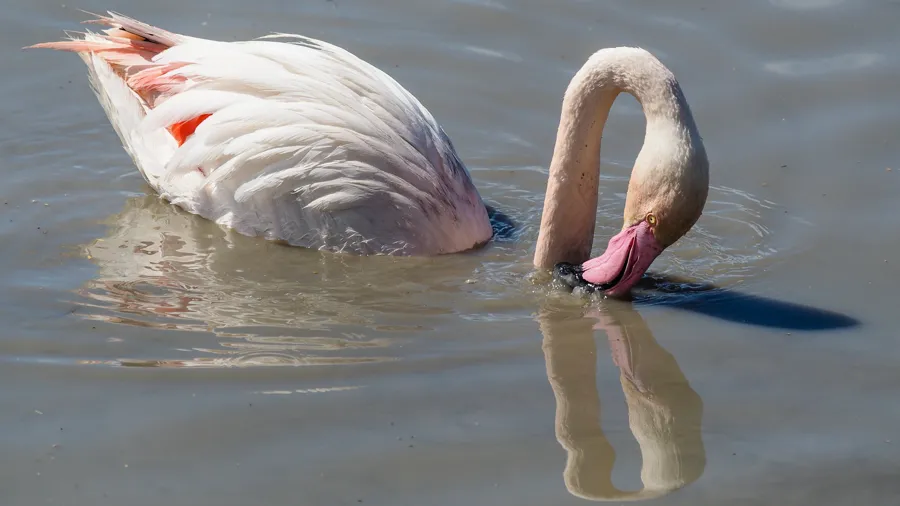
A feeding flamingo puts its head upside down in the water, with the bill pointing back at its feet. Comb-like plates called lamellae line the edge of the bill. They let the water rush out and keep the food inside, helped by a large, rough tongue. The menu includes algae, cyanobacteria (blue-green algae), brine shrimp, small seeds, fly larvae, insects and mollusks.
From food to feathers
Liver enzymes break the carotenoids down into the pigments that color the feathers. A young bird gets its pink over a few molts, as new feathers grow in to replace the white ones.
The amount of pigment sets the shade, so the six flamingo species do not look alike. The American flamingo is bright red because its food carries plenty of beta-carotene. The lesser flamingo eats less of the pigment and stays a paler pink. Birds that live on blue-green algae alone come out darker than those that get the pigment second-hand from animals.
What happens in a zoo
Captive flamingos fed without enough carotenoids turn pale pink, even on an otherwise good diet. At Whipsnade, Tim Savage says his birds would end up a very light pink without added pigment.
Zoos fix this with food. The Los Angeles Zoo gives its flamingos a diet containing canthaxanthin, a carotenoid pigment. Whipsnade feeds a bespoke pellet with canthaxanthin mixed in during processing.
The same trick cannot make a blue flamingo. In other birds, blue and green come from the structure of the feather and the way it reflects light. Amanda Ferguson, who manages the diets at Whipsnade and London Zoo, says blue food coloring would make no difference. The bird would digest it, because only carotenoids pass into the feathers.
Makeup for mating season
Greater flamingos also touch up their color. A study by Juan A. Amat and colleagues at the Doñana Biological Station in Seville came out online in 2010 in Behavioral Ecology and Sociobiology. Its title: "Greater flamingos Phoenicopterus roseus use uropygial secretions as make-up."
The uropygial gland, or preen gland, sits near the base of the tail. Its secretions carry carotenoids. The birds spread them by rubbing their heads on their neck, breast and back feathers. Their plumage looked brightest in the periods when they displayed in groups, and it faded soon after breeding began. The authors called it the first proof that birds use preen gland pigments as cosmetics, most likely to win a mate.
Pink as a signal
A bird can only be bright pink if it finds enough of the right food, so the color works as a health report. Pale adults tend to be sick, underfed or busy feeding a chick, and a richer color makes a flamingo more attractive to a mate.
Zoos that keep more than one species show the effect side by side. Look for the deep red of American flamingos next to the paler pink of greater or lesser flamingos. The birds hatch the same white-gray, and most of the difference comes from what they eat.
FAQ
Are flamingos born pink?
No. Baby flamingos hatch with white-gray down and straight bills. They stay gray until they move on to solid food, and the Los Angeles Zoo says full adult color takes about two years.
What do baby flamingos eat?
Crop milk, a fluid rich in proteins and fats. Both parents produce it and feed the chick until it can eat on its own.
Why are some flamingos redder than others?
The shade depends on how much pigment the food carries. American flamingos get plenty of beta-carotene and look bright red, while lesser flamingos eat less of it and stay a paler pink.
Do flamingos turn white if they stop eating carotenoids?
They fade to a very pale pink. Captive flamingos lose their color even on an otherwise good diet unless they get carotenoids close to wild levels, which is why zoos add canthaxanthin to their food.
Sources
- Smithsonian's National Zoo: Why Are Flamingos Pink? And Other Flamingo Facts
- Wikipedia: Flamingo
- Wikipedia: Beta-Carotene
- Los Angeles Zoo: Flamingos
- IFLScience: If Flamingos Get Their Color From Their Diet, Could You Hypothetically Turn One Blue? (September 5, 2026)
- ScienceDaily: greater flamingos use preen gland secretions as make-up (October 25, 2010)